
Return to player and house edge often appear in descriptions of casino games, yet the percentages are easy to misunderstand. They describe mathematical expectations under a defined model rather than a promise about an individual session. For readers exploring gaming information connected with Good88, the useful starting point is to separate the game rules, the source of a published percentage, and the practical limits of what that number can explain.
Start With the Game and Its Published Information

When browsing good 88, identify the exact game and version before interpreting any percentage. A general article may discuss several products without documenting the settings of each one. The name of a platform does not establish the return of every game mentioned on a website. Look for a game specific explanation and avoid treating an attractive headline as verification of the underlying calculation.
Next, distinguish a description written by a publisher from independently supported information. A claim about testing, licensing, or certification needs evidence that actually covers the product in question. This article does not verify those characteristics for the linked website. Reading a number carefully includes asking where it came from and whether the accompanying explanation describes theoretical design or measured results.
Useful questions can be simple. Does the description identify the rules to which the percentage applies? Does it explain assumptions that could affect the calculation? Is the material current enough to match the version being discussed? If these details are missing, acknowledge the uncertainty rather than filling the gaps with an assumption based on another game or a review of a different service.
When comparing two descriptions, keep the comparison narrow. A percentage associated with one set of rules should not be transferred to a different product because the titles look similar. Likewise, a summary page can simplify important qualifications found in the full explanation. Save the relevant wording and its date if you need to ask a question later. A clear record makes it easier to discuss a specific claim without relying on a screenshot that has lost its original context.
Read the Two Percentages as Expectations
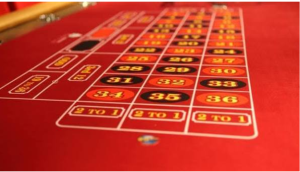
The phrase rtp và house edge points to two related concepts. RTP describes expected returns relative to the amount wagered under the stated game model. House edge expresses the operator’s expected advantage. For the same simple model, a theoretical RTP of 96 percent corresponds to a house edge of 4 percent. These are complementary ways to describe an average, not guaranteed percentages of an individual deposit.
Consider a purely illustrative model with 1,000 units of total wagers and a 4 percent house edge. Its expected net loss is 40 units, so the expected total returned is 960 units. An actual set of outcomes can differ substantially. The example is arithmetic for understanding the model; it is not a forecast, a recommended budget, or a statement about a game offered by the linked site.
Total wagers also differ from the money initially deposited. Reusing returned funds creates additional wagers without necessarily requiring another deposit. That is why a return percentage should not be read as a promise that a specified share of a starting balance will remain. Keeping those quantities separate prevents a common misunderstanding when comparing a published figure with the balance seen at the end of a session.
Keep Mathematical Information Separate From Spending Decisions

A theoretical average does not provide a schedule for wins or losses. A short sequence cannot establish that a game must compensate a particular player next. For independent random rounds, earlier outcomes do not make a future result due. Extending a session to recover a perceived shortfall exposes additional money to risk rather than creating a claim on a promised return.
Different games may also distribute outcomes differently, so a return figure alone does not describe every aspect of an experience. Understanding rules and uncertainty can improve interpretation, but it does not eliminate the possibility of losing the full amount set aside. A percentage should therefore remain background information rather than a reason to increase stakes, borrow money, or continue after a planned stopping point.
Before considering any activity involving real money, check the applicable age requirements and law where you live. Decide whether participation fits your circumstances and keep essential expenses separate. Time limits, spending limits, and breaks can help preserve that decision. If staying within a chosen limit becomes difficult, stop and consider suitable support or account restriction options rather than searching for a mathematical explanation to justify continuing.
Conclusion
RTP and house edge are useful when they clarify a defined game’s expected mathematics. They become misleading when treated as personal guarantees or instructions about when to keep playing. Identify the source, match the explanation to the relevant rules, and distinguish total wagers from deposits. With those boundaries clear, readers can interpret gaming descriptions more accurately while keeping spending decisions separate from promotional percentages.
Leave a Reply