
A match analysis becomes useful when readers can see how its conclusion was reached. Team names and a confident prediction are not enough. The article needs a clear fixture, relevant evidence, and an honest account of uncertainty. Approaching football information this way helps readers evaluate the explanation itself instead of relying on a reputation suggested by a headline.
Establish the context before accepting the conclusion
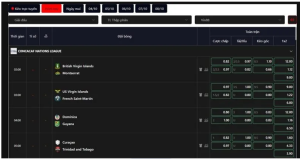
Someone searching for keo nha cai should begin by identifying what type of material the destination presents. A glossary, a market display, and an opinion article have different purposes. Assess each according to the question it is meant to answer rather than assuming that one accurate detail validates all the other content.
A useful preview identifies the competition and the exact fixture. Similar team names or overlapping schedules can lead to information being attached to the wrong match. Keep the date and the participants visible when checking supporting reports. This avoids turning an otherwise correct statistic into a misleading argument about a different event.
Evidence should also have a relevant time frame. A long term record may describe a broad pattern, while recent matches may show a shorter period. Neither automatically replaces the other. An explanation should say why a particular period was chosen and avoid presenting a selectively favourable sample as the complete story.
Descriptions of team news need special care. A report may be provisional, refer to another competition, or have been overtaken by an update. Check what the original statement actually supports. Do not turn a possibility into a confirmed absence merely because the stronger version makes a preview sound more decisive.
Use keonhacai as a starting point for questions
When reading keonhacai, ask which parts of an argument are observations and which are interpretations. A score from a completed match is an observation when properly sourced. The claim that the same pattern will continue is an interpretation. Keeping those categories separate makes the strength of the reasoning easier to judge.
Statistics need definitions as well as numbers. Two sources may count an event differently or cover different sets of matches. Before comparing them, inspect the period, competition, and inclusion rules if available. A disagreement does not always mean one table is wrong; the tables may simply answer different questions.
A preview should explain how evidence connects to its conclusion. Listing possession, recent scores, and rankings does not by itself establish an outcome. Ask whether an alternative interpretation could fit the same information. If several plausible stories remain, the conclusion should reflect that uncertainty instead of hiding it behind emphatic language.
Readers can improve their own notes by recording a short reason for each judgment. The note should describe the information available at the time, not a story invented after the final score. This makes later review more honest and reduces the temptation to claim that an unpredictable event had always been obvious.
A shared link should retain its context when passed to another reader. Include the fixture date and explain whether you are sharing a definition, a statistic, or an opinion. Avoid adding stronger language than the source supports. This preserves the original limits of the information and makes it easier for the next person to check the same evidence rather than inherit an unexplained conclusion.
Review the reasoning without turning it into a guarantee

One correct forecast can be memorable while several weaker examples are forgotten. To assess a series of articles, use a consistent review period and include all relevant cases. Changing the sample after seeing results creates a flattering picture without demonstrating reliability. Clear records are more useful than a collection of winning screenshots.
Reading analysis does not require a financial decision. A person may enjoy understanding tactics, compare opinions, and watch the match without wagering. That remains a complete use of the information. Promotional urgency should not remove the time needed to check a claim or consider whether participation is appropriate.
If real money is involved, adults should check local rules and set limits before acting. Essential spending and borrowed funds should remain outside an entertainment budget. A loss does not create a need to recover it through a larger amount, and a winning result does not prove that risk has disappeared.
Finally, evaluate communication as well as conclusions. Does the article identify sources, distinguish assumptions, and correct errors clearly? Those qualities help readers understand what can be relied upon and what remains uncertain. They are more meaningful than a confident tone or a claim that a particular method cannot fail.
Conclusion
Clearly labelled football analysis gives readers a way to examine evidence rather than merely accept a prediction. Identify the fixture, check definitions and dates, and preserve the distinction between observation and interpretation. No article can guarantee a match result. A thoughtful reading routine keeps uncertainty visible and leaves room to stop without financial pressure.
Leave a Reply