
A football market page is easier to understand when the reader knows which question each figure answers. A price, a fixture label, and an opinion may appear close together while serving different purposes. This introduction focuses on reading those layers in order. The aim is to make football information useful without implying that a clear display or a persuasive explanation can guarantee an outcome.
Start by identifying the event and the purpose of the visit

When searching for kèo nhà cái 5, begin with a specific purpose such as understanding a term or checking the context of a fixture. A familiar phrase is only a starting point. It does not independently establish the identity of a destination or confirm every claim that appears beside the information.
Keep the competition, the teams, and the date together before comparing any numbers. Similar names can refer to different squads or events, and an old preview may still appear in a search result. A short record of the fixture helps prevent accurate information from being attached to the wrong match.
Next, identify what kind of material is being presented. A definition explains terminology, a data display records a value, and a preview offers an interpretation. Confidence in one layer should not automatically be transferred to another. An accurate kickoff time, for example, cannot establish that an accompanying prediction is dependable.
Choose a manageable question rather than opening every available item. A reader who wants to understand one notation can finish after finding a clear definition and a relevant example. More browsing is not necessarily more understanding. A focused visit makes missing explanations easier to recognize and reduces the pressure to respond to every update.
Connect each figure to the conditions that give it meaning
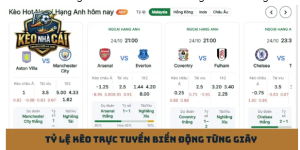
When exploring keo nha cai 5, keep the market label beside the displayed value. Two figures involving the same teams may refer to different periods or outcomes. A meaningful comparison requires equivalent conditions, not merely similar numbers. If the label is unclear, resolve that uncertainty before discussing which value looks higher or lower.
Examples should state their assumptions. A calculation needs to explain the hypothetical amount, the condition being illustrated, and whether a stated total includes the original amount. Correct arithmetic describes that scenario. It does not demonstrate the probability of the scenario or make the result of an actual match predictable.
Observation times matter because values can change. A saved screenshot and a current page may both reflect their respective moments. Record the time and the scope before interpreting a difference. Without those details, an ordinary change can be described misleadingly as an error or as evidence for a story the data does not establish.
Be cautious about explanations that connect a movement to one news item without supporting evidence. Events occurring close together do not automatically prove a causal relationship. A useful article distinguishes the change that was observed from the reason being proposed. Where several explanations remain possible, the wording should preserve that uncertainty.
A small glossary can help keep unfamiliar terms separate from suggested actions. Record the definition and its source, then revisit it when a new example appears. This turns repeated reading into a clearer learning process rather than a collection of figures remembered without the conditions that originally explained them.
Use analysis as a source of questions rather than certainty
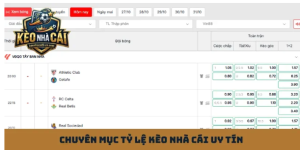
A preview becomes more useful when it shows how its evidence supports its conclusion. Listing recent scores, team news, and rankings is not enough by itself. Ask whether another interpretation could fit the same information. This question helps readers assess reasoning instead of relying on the strength of the language.
Team information also needs a date and an identifiable source. A possible absence should not be presented as confirmed simply because that makes an argument sound more decisive. If the information changes after publication, separate what was known at the time from what became clear later. This makes review more accurate and fair.
One correct prediction cannot establish a reliable method. A meaningful review needs a consistent sample that includes unsuccessful cases as well as memorable successes. Selecting only favourable screenshots creates a distorted impression. Evaluate assumptions and evidence, rather than treating the final score alone as proof that every step in the argument was sound.
Learning terminology does not require a payment or a wager. Adults considering any real money activity should first check local requirements and protect essential expenses. Set limits before emotions become involved, avoid borrowed funds, and do not increase spending to recover a loss. No market display can turn an uncertain event into a guaranteed financial return.
Conclusion
Clear football information keeps values attached to their labels, conditions, and observation times. Identify the fixture, distinguish definitions from opinions, and check the assumptions behind examples. This reading routine supports informed understanding while preserving the choice to pause or leave. A useful explanation should make uncertainty visible rather than promise that a confident interpretation will always produce the expected result.
Leave a Reply