
Not every noteworthy moment in football comes from goals or dangerous shots. Sometimes, a challenge near the touchline creates a situation worth analyzing, especially when the number of throw-ins is used as a statistical measure. Throw-In Betting at Vebo helps football fans understand how this market operates, from recording rules to commonly available betting lines.
When watching Vebo TV , viewers can observe how both teams move the ball along the flanks and the situations that cause it to leave the field. However, throw-in totals are influenced by several factors and cannot be predicted accurately from just a few individual statistics.
How Is Throw-In Betting at Vebo Calculated?
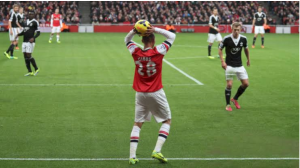
How Is Throw-In Betting at Vebo Calculated?
A throw-in is a method of restarting play after the ball has completely crossed the touchline, either on the ground or in the air. In statistical betting markets, throw-in totals are recorded according to the applicable time period and the provider’s settlement rules.
Identify Valid Throw-In Situations
A throw-in is awarded to the team that did not touch the ball last before it completely crossed the touchline. However, statistical recording may depend on whether the throw-in has actually been taken or has merely been awarded by the referee. Therefore, viewers should check the market’s settlement rules rather than independently counting every occasion when the ball leaves the field.
Distinguish Throw-Ins from Corner Kicks
In Throw-In Betting at Vebo, the boundary crossed by the ball determines the difference between a throw-in and other set-piece situations. If the ball crosses the goal line after being last touched by a defending player, the attacking team is generally awarded a corner kick rather than a throw-in. Conversely, when the ball crosses the touchline, a throw-in is awarded regardless of whether the situation resulted from a pass or a challenge.
Applicable Statistical Period
Throw-in markets may cover the full match, individual halves, or specific periods if supported by the provider. For standard full-match selections, the statistics generally include 90 minutes of regular play plus stoppage time but exclude extra time. Viewers should confirm the applicable period before using statistics from a knockout match.
What Are the Common Markets in Throw-In Betting at Vebo?

What Are the Common Markets in Throw-In Betting at Vebo?
Throw-in markets may be based on the combined total for both teams or on a comparison of their individual statistics. These calculation methods create clear differences in the conditions used to determine winning and losing selections.
Over/Under Total Throw-Ins
Over/Under throw-in betting compares the combined number of valid throw-ins taken by both teams against a published line. For example, with a line of 39.5, the Over selection wins when at least 40 throw-ins are recorded. If the total finishes at 39 or fewer, the Under selection wins under standard settlement rules.
Throw-In Handicap Betting
In Throw-In Betting at Vebo, throw-in handicaps compare the statistics of both teams after applying a numerical adjustment. For example, if Team A gives a handicap of 3.5 throw-ins, it must take at least four more throw-ins than its opponent to cover the handicap. The result is determined by valid throw-in statistics rather than directly by the final match score.
Throw-Ins by Half
First-half and second-half throw-in markets only count situations occurring during their respective periods. A match with a high overall throw-in total may still record relatively few throw-ins in the opening half if the ball remains largely in play. Viewers should distinguish between half-specific statistics and full-match figures before evaluating the odds.
What Factors Influence Throw-In Betting at Vebo?

What Factors Influence Throw-In Betting at Vebo?
Throw-in totals may vary according to playing style, the intensity of challenges, and the areas where players operate. When analyzing Throw-In Betting at Vebo, football fans can also consult the BXH to better understand both teams’ positions and competitive objectives. However, league rankings should not be treated as a direct basis for predicting throw-in totals.
Observe Wing-Based Playing Styles
Teams that frequently pass the ball along the touchlines often create challenges near the boundaries of the pitch. However, not every attack down the flank results in a throw-in, as the ball may be passed backward or delivered into the penalty area.
Evaluate the Intensity of Challenges
In Throw-In Betting at Vebo, matches featuring frequent pressing and battles for possession in tight spaces may produce a noticeable number of situations where the ball leaves the field. Nevertheless, teams with strong possession control may still limit such incidents even when facing sustained pressure.
Compare Statistical Records
Average throw-in totals from recent matches can help viewers identify certain characteristics of a team’s playing style. However, these statistics may change considerably when opponents adopt different tactics or playing conditions are not comparable.
Conclusion
Throw-In Betting at Vebo offers a different perspective on football by focusing on situations where the ball crosses the touchline. Understanding how statistics are recorded, distinguishing between betting markets, and evaluating tactical influences helps football fans approach this market more systematically.
Alongside throw-in statistics, information about recent form, squad availability, and competitive objectives can also support pre-match analysis. However, every prediction carries uncertainty, so statistical information should always be interpreted with caution.
Leave a Reply