
The Biggest Storylines Heading Into the 2026 FIFA World Cup
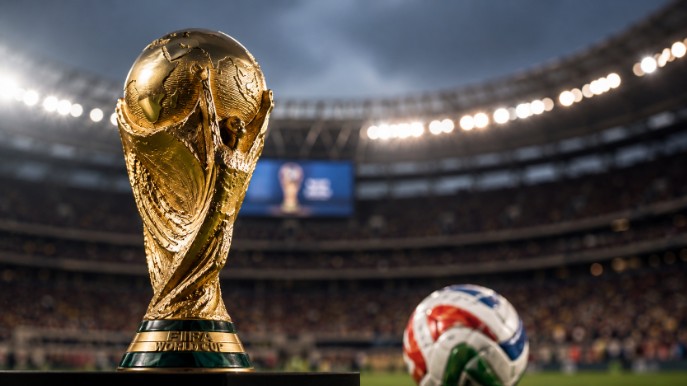
The 2026 FIFA World Cup begins June 11 with Mexico facing South Africa at Estadio Azteca in Mexico City, then runs through the July 19 final at MetLife Stadium in East Rutherford. This is the first 48-team men’s World Cup, spread across 16 cities in the United States, Mexico, and Canada, with 104 matches on the board. That size changes the rhythm before a ball moves: more travel, more third-place math, more short turnarounds, and more room for one sharp counterattack to bend a group. No cushion.
The Hosts Carry Different Kinds of Weight
Mexico gets the first walk into the noise, and South Africa is not a ceremonial opener after its 2010 memory still lingers in tournament culture. The United States starts against Paraguay on June 12 at SoFi Stadium in Inglewood, where Mauricio Pochettino’s side will have to control transition moments rather than just feed off the crowd. Canada opens the same day against Bosnia and Herzegovina at BMO Field in Toronto, a different test built around tempo, second balls, and whether Alphonso Davies can still tilt a flank after 70 minutes: three hosts, three moods, three chances for an early stumble to become the story.
The Expanded Draw Has Teeth
The 12 groups of four teams send the top two into the Round of 32, with the eight best third-placed teams also surviving, so conservative soccer will tempt plenty of managers by Matchday 3. Group L gives England Croatia, Ghana, and Panama, a draw with old scars: Croatia beat England 2-1 after extra time in the 2018 World Cup semifinal, while England beat Panama 6-1 later that same tournament cycle. Thomas Tuchel’s England opens against Croatia on June 17 at AT&T Stadium in Arlington, then gets Ghana and Panama, which means set-piece marking and game-state control will matter before the knockout bracket even forms. One yellow card can travel.
Spain Arrives With Evidence, Not Noise
Spain’s 3-1 win over Peru on June 8 at Estadio Cuauhtémoc in Puebla offered a useful pre-tournament snapshot. Mikel Oyarzabal scored inside two minutes from the edge of the area, Pedri tapped in after Ferran Torres crossed, and Yeremy Pino’s second-half delivery forced the error that became the third goal. Luis de la Fuente’s side opens against Cape Verde on June 15 in Atlanta, then faces Saudi Arabia and Uruguay in Group H, where Uruguay’s midfield pressure should give Spain less room between the lines than Peru did. The small detail from Puebla was the speed of Spain’s first pass after regains, especially when Rodri received with his body already open.
Betting Markets Will Chase the Same Margins
World Cup betting is often sold as instinct, but the better reading sits closer to scouting: injuries, starting elevens, rest days, travel, pressing intensity, and whether a team’s fullbacks leave space behind them. Fans tracking gambling games (Arabic: العاب مراهنات) during the group stage will see that a single match can punish the correct read, and that there is less about naming a winner and more about judging whether the price still reflects the match conditions. A red card in the 28th minute, a hamstring tweak in warmups, or a goalkeeper playing through contact can change the whole board. Bankroll discipline matters because variance does not care how strong the preview sounded at noon.
Argentina’s Defense Starts Before the Back Line
Argentina lands in Group J with Algeria, Austria, and Jordan, and Lionel Scaloni’s first problem is not romance around Lionel Messi; it is how the champion protects central spaces when matches stretch. The June 16 opener against Algeria in Kansas City should test Argentina’s ability to stop Riyad Mahrez from receiving in the half-space on his left foot, especially if Algeria can draw pressure and switch quickly. Austria, under Ralf Rangnick, brings a different problem on June 22 at AT&T Stadium in Arlington, with counter-pressing and direct midfield runs that make lazy square passes dangerous. Jordan, making its first World Cup appearance, closes out the group against Argentina on June 27, and first-time tournament teams often play with a freedom that disrupts tidy models.
The Phone Is Now Part of Matchday
The second screen will be everywhere from Estadio Azteca to BC Place Vancouver, and it will not only show clips. Fans will check lineups, odds, suspension risk, heat maps, travel fatigue, and late injury reports while the pregame shows are still arguing about formations. A reader who wants the mobile route might download the MelBet application (Arabic: تحميل تطبيق MelBet) before comparing live markets, account tools, fixture lists, and in-play football odds during the tournament. That fits the way modern viewing works: the match is still on the main screen, but the detail battle sits in the hand. Good apps reduce friction when the schedule throws four games across four time zones in one day.
The Last Dance May Not Wait
The tournament’s human weight sits with the older stars as much as the new bracket. Messi, Cristiano Ronaldo, Luka Modrić, Harry Kane, Kylian Mbappé, Vinícius Júnior, Jude Bellingham, and Lamine Yamal all arrive under different pressures, from legacy to first trophy to proving that club form can survive the World Cup’s thinner air. England’s meeting with Croatia gives Modrić another major-tournament stage, while Brazil’s June 13 opener against Morocco at Gillette Stadium in Foxborough gives Vinícius a clean first marker against a side comfortable defending in compact blocks. The ball will roll, the odds will move, and somewhere in the 89th minute, a fullback will glance over his shoulder too late.
Leave a Reply