
Infrastructure can significantly alter a country’s economy. The existence of roads negates the need for freight to be transported overland. Continuous electricity allows for uninterrupted manufacturing. Increasing Iraq’s public infrastructure promotes Iraq’s economic development. Investment by other countries enables the implementation of larger projects. Improving public infrastructure provides several positive economic impacts, including improving the quality of life and facilities.
Why International Capital Matters for Iraq
Foreign investment encompasses a wide range of projects. Some investments foster communication and other day-to-day services. The expansion of communication networks in a country can, for instance, provide local firms with the means to promote and sell their products online. Improved communication networks also offer customers the opportunity to access a variety of online services, such as sports-related online platforms that offer users the opportunity to select and install the best football betting app (Arabic: مراهنات كرة القدم في العراق). Likewise, the expansion of communication services and other digital networks facilitates and provides means for a more interactive digital economy.
International investors, in addition to capital, also bring to a host country improved methods and standards in construction and after-construction services. Iraqi firms can benefit from working with international firms to enhance their services and improve their methods to construct and offer more specialized projects.
How Infrastructure Investment Reaches Different Industries
Investment in transportation or utilities infrastructure can make related industries more efficient. Improving power transmission can help hospitals avoid equipment failure. Improving telecommunications can increase entertainment industry output. Gaming is an industry subdivision of entertainment. Games in the genre of interactive simulations, like aviator, rely on digital distribution and therefore depend on telecommunications and finance infrastructure. Ultimately, communication infrastructure enhances and facilitates business activities. A positive impact on one industry can potentially improve several other industries.
Main Infrastructure Sectors Receiving Investment
International funds can support different kinds of projects. Some projects can improve and develop the commercial sector. Other projects can improve or create different public services.
| Infrastructure sector | Main investment focus | Expected economic benefit |
| Transportation | Roads, railways, and ports | Easier movement of goods |
| Energy | Power generation and distribution | More reliable electricity |
| Water services | Treatment plants and supply networks | Better access to clean water |
| Telecommunications | Broadband and network coverage | Growth of digital services |
| Public facilities | Hospitals and educational buildings | Improved community services |
These industries are related. The construction of new electric power generation facilities attracts new manufacturers to the area. In turn, the increase in manufacturers increases the demand for port facilities. Improvements to port facilities allow for an increased velocity of cargo through the port.
Transportation Projects Connect Iraq With Regional Markets
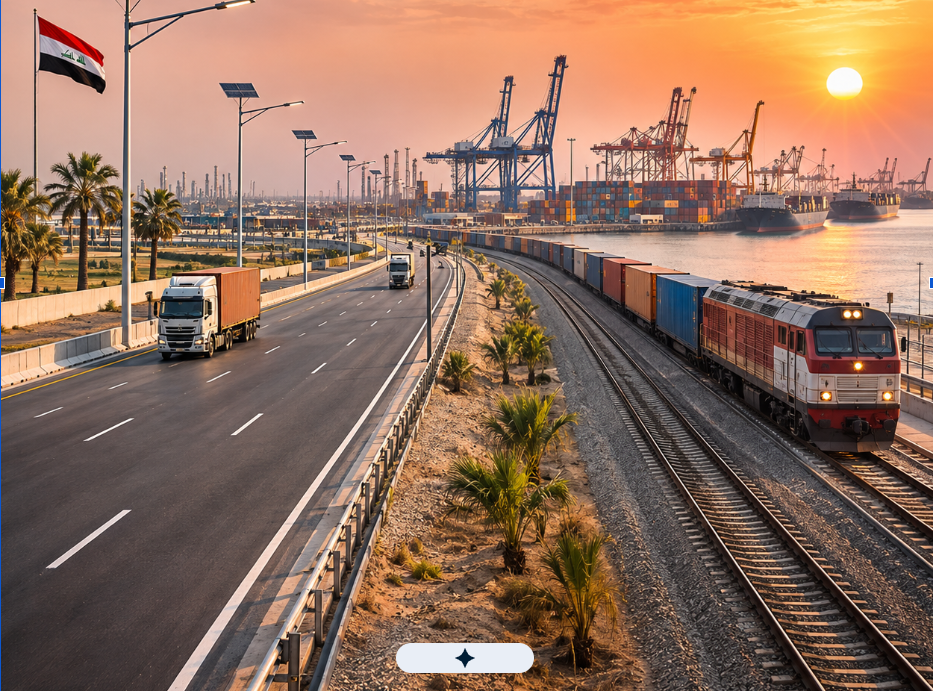
Between the Gulf and adjacent markets, Iraq can strategically position international trade and transit routes. Trade routes can be further developed and implemented with external financing.
The aim of the Iraq Development Road program is to construct and improve transportation routes to connect port facilities in the south to the north and the adjacent Turkish border. Improved transportation routes can attract investment in related activities and industries.
The World Bank, in June 2025, approved an amount of $930 million to modernize the railway lines connecting Umm Qasr Port to the city of Mosul. In June 2026, the Bank approved another loan of the same amount to improve and construct roads connecting the northern and southern portions of the country. It is expected that upon completion of these projects, the modern transport services will contribute to the growth of the national economy.
Benefits for Local Businesses
Transportation improvements lead to greater opportunities to move agricultural and manufactured products to various markets throughout Iraq.
- Farmers can gain access to urban markets.
- Manufacturers have the ability to source raw materials and then produce items to satisfy market demand.
- Logistics companies can develop their operations by establishing distribution centers along major transportation corridors.
- Retail businesses can source goods from companies in other Governorates.
Citizens can visit historical and tourism sites in other Governorates. Improved transport services strengthen the tourism industry.
Energy Investment Supports Industrial Expansion
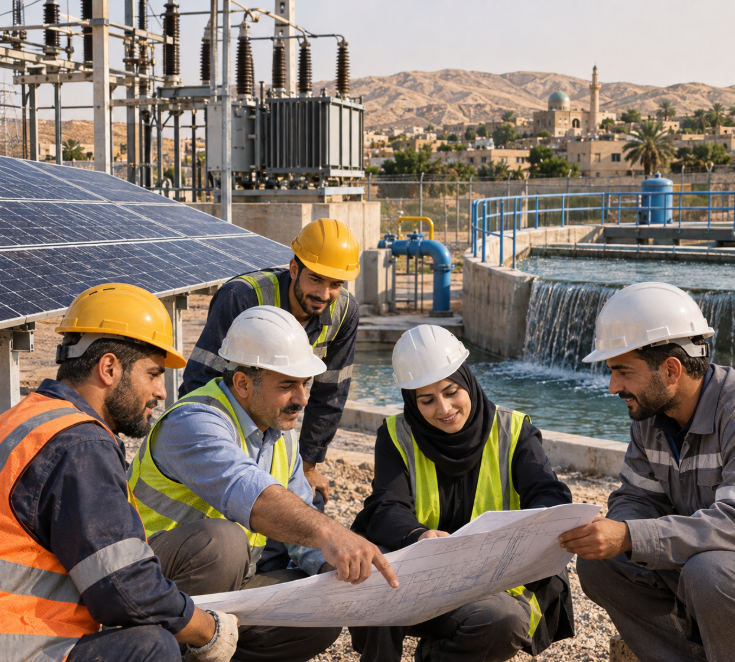
For Iraq’s industries to develop and flourish, the country needs to improve its power infrastructure. Power outages can impact the manufacturing process and disrupt businesses. A reliable and stable source of power is essential for business operations.
Given the right opportunities, foreign companies can invest in power projects and contribute to the modernization of the power sector. The transfer of skills in high-tech power projects, smart grid projects, and renewable energy projects can further strengthen long-term business partnerships.
Improving Energy Efficiency
Building new power plants is important, but improving the power line infrastructure is equally necessary.
More efficient monitoring equipment allows power companies to control better when and where electricity is distributed. New substations can help satisfy the growing demand for electricity. International investments may lead to advanced equipment and training for Iraqi engineers.
Availability of consistent electricity allows industry to develop and expand production. New plans for facility locations can be developed based on more realistic operating costs.
How Foreign Investment Is Organized
Different financing methods are available for international infrastructure projects. For example, some governments take out loans from development banks to construct public facilities. In projects where revenue is generated from the use of the infrastructure, it may be financially attractive to construct the facility from a business perspective.
Alternatively, the use of public-private partnerships (PPPs) may be considered. PPPs allow the government and a private firm to collaborate on a project. The conditions of the collaboration may vary and may depend on the project and the services provided.
Several conditions help ensure the success of a partnership.
- A contract may specify the responsibilities of the partners.
- An open and competitive procurement process ensures that companies may have an opportunity to provide a service.
- Regular evaluations may help ensure the construction conforms to standards.
- A plan may ensure that the facilities are maintained after the construction is completed.
Additionally, the expected maintenance costs may help determine the attractiveness of an investment.
Employment and Skills Development Across Iraq
There is employment during planning and the duration of construction. Some workers are engineers and equipment operators. Other workers are in the construction and allied trades. Local suppliers also benefit from contracts awarded to construction firms.
Employment opportunities exist after the end of construction. Railway terminals and electricity transmission and distribution projects require highly skilled and trained operating and maintenance personnel.
There is a great potential for international companies to train personnel in the use of modern equipment and techniques in the building and construction industries. International companies can also install and demonstrate the use of machinery and equipment in Iraq. International companies can also foster the growth of management skills of local personnel.
Supporting Smaller Communities
Investment outside major markets depends largely on the quality of local infrastructure. Farmers with access to all-weather roads, for example, have more options for selling their crops. Businesses, including families, are less likely to move to communities lacking safe drinking water.
Community-based infrastructure projects in Iraq, supported by the World Bank, have addressed roads,d water, and other community facilities. Emphasis has been on constructing core infrastructure as well as creating temporary jobs and encouraging community involvement in all phases of project planning and implementation.
Building Infrastructure That Lasts
Investment projects have value based on their expected long-term performance. Variables such as operational expenses, deterioration and failure rates of capital assets, and variation in demand for the assets should be considered in a project’s planning phase to determine expected performance more accurately.
International investment projects in Iraq can be the most beneficial when foreign capital is allocated to nationally defined, high-priority projects. Only through the strategic coordination of the public and private sectors can investment resources be allocated to projects that have the most positive impact.
Large-scale, project-based international investments can potentially improve public services and create a more stable business environment in Iraq. As the demand for foreign direct investment in Iraq increases, so too will the opportunity for positive, long-lasting improvements to the Iraqi way of life.
Leave a Reply