
The Breeders’ Cup World Championships return to Keeneland on 30–31 October, with the $7 million Classic on Saturday 31 October. By the end of August, the first futures prices and a series of Win and You’re In races had already started to define the autumn picture.
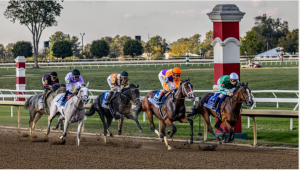
For those following horse race betting online, prep results and Breeders’ Cup prices are closely connected. A strong performance can shorten a horse for October, while a defeat can shift attention elsewhere.
Late-August Qualifiers Set an Early Benchmark
The 29 August programme was one of the busiest Challenge dates of the season. Saratoga staged the $1.25 million Travers, alongside three races offering automatic Breeders’ Cup berths: the Personal Ensign for the Distaff, Forego for the Dirt Mile and Ballerina for the Filly & Mare Sprint.
At Del Mar, the Pat O’Brien provided another Dirt Mile qualifier, while the Del Mar Handicap offered a route to the Turf.
The Travers was not itself a Challenge race, but its field made it relevant to the Classic picture. Golden Tempo, winner of the Kentucky Derby and Belmont Stakes for Cherie DeVaux, was listed at 5-2 on the morning line from post nine. Renegade, second in the Derby and winner of the Jim Dandy, was 3-1.
Neither entered the weekend with a locked Classic berth. Their pre-race prices therefore provide a benchmark for later market moves.
The First Classic Futures Pool Set the Market
The first Breeders’ Cup Classic Future Wager ran from 28 August to 30 August, establishing an early hierarchy.
Sovereignty, winner of the Whitney on 8 August, headed the board at 4-1. Last year’s Classic winner and Saudi Cup hero Forever Young followed at 5-1. Pacific Classic winner Knightsbridge was 6-1, while Dubai World Cup and Stephen Foster winner Magnitude stood at 10-1.
“All other starters” was priced at 8-1, while the pool contained 23 individual horses, leaving room for runners outside the original list.
The first pool is best read as a snapshot. Futures tickets also carry additional risk because the horse does not have to start. A 4-1 ticket on Sovereignty, for example, would lose if he missed the Classic.
How the Late-August Form Affects Futures
The prices attached to Golden Tempo, Renegade and the leading older horses give later market movements a point of comparison. Golden Tempo was around 12-1 in the early Classic picture, so any major change after Saratoga can be measured against that price.
The second official Classic Future Wager is scheduled for 25–27 September. By then, bettors will have another month of evidence.
Division remains important. Forego and Pat O’Brien are both seven-furlong Dirt Mile qualifiers. A horse can earn an automatic Breeders’ Cup place there without becoming a stronger Classic candidate. The performance still has to be judged against the distance and division likely at Keeneland.
Reading the Preps Beyond the Winner
Automatic qualification puts attention on the winner, but the horses behind can influence later markets too.
Three points matter:
- Separate qualification from form. Pace, trip and distance still determine how well a performance may transfer to Keeneland.
- Watch the placed horses. Only the winner receives the automatic berth, but narrow defeats can still affect later prices.
- Compare new prices with the August baseline. A shorter quote may simply reflect information already absorbed by the market.
The next major Classic markers include the Jockey Club Gold Cup on 18 September and the Goodwood at Santa Anita on 26 September, the final two Classic Challenge races.
Kentucky Downs adds another checkpoint on 5 September, when the Turf Sprint and Turf Cup offer Challenge berths, although that form does not always transfer neatly to Keeneland.
The Classic Picture Still Has Room to Change
The late-August market established a recognizable group. Sovereignty led the older dirt horses, Forever Young brought proven international and Breeders’ Cup form, Knightsbridge represented the West Coast challenge and Magnitude had established himself over two turns.
The three-year-olds still have to be measured against that group over 10 furlongs in the autumn.
September therefore remains important. Each prep can alter the Keeneland field and show whether the prices established in the first futures pool still reflect the evidence available closer to the Classic.
Leave a Reply