
The 2026 FIFA World Cup introduces a bracket structure unlike anything football has seen before. With 48 teams competing in 12 groups, followed by a 32-team knockout phase, the path from group stage to final is more complex — and more strategically significant — than in any previous tournament. Understanding the bracket isn’t just useful for following matches; it’s essential for predicting which teams are likely to meet, where upsets might occur, and how group results cascade into knockout-stage matchups.
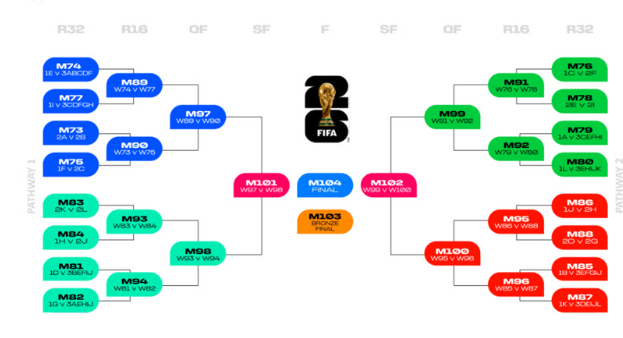
Navigating the Most Complex World Cup Bracket Ever
The bracket’s complexity has created an entirely new dimension of pre-tournament analysis. Which side of the draw is stronger? Which group winners have the most favorable paths to the semifinals? These questions, always relevant in 32-team tournaments, become significantly more nuanced with 48 teams and the introduction of a Round of 32.
From 12 Groups to 32 Knockout Teams
The group stage produces 32 advancing teams through three channels: 12 group winners, 12 runners-up, and 8 best third-placed teams. This three-tier advancement system means the bracket isn’t symmetrical — group winners receive more favorable knockout draws (facing third-placed qualifiers in the Round of 32), while runners-up face a potentially tougher path.
This asymmetry creates strategic incentives within the group stage itself. Finishing first versus second in a group could mean the difference between facing a weaker third-placed team or a strong runner-up in the first knockout round. Analysts who understand these bracket implications can make more informed assessments of how group-stage dynamics will play out.
Why Korean Fans Are Obsessed with the Bracket
In South Korea, the tournament bracket — known as 월드컵 대진표 — generates extraordinary levels of fan engagement. Korean football culture treats bracket analysis as a serious analytical exercise, with platforms publishing detailed projections of knockout-stage matchups based on group-stage probabilities. This isn’t casual speculation; Korean analysis sites use Monte Carlo simulations running thousands of tournament scenarios to estimate the probability of specific bracket outcomes.
The bracket’s structure is particularly significant for South Korea’s tournament prospects. Depending on their group result and placement, the national team could face vastly different knockout-stage opponents. A first-place finish might create a path to the quarterfinals through beatable opposition, while a third-place qualification could mean an immediate clash with a group winner from a strong pot. This variability makes group-stage performance even more critical than the results alone suggest.
The Round of 32: A World Cup First
The most significant structural addition is the Round of 32, which didn’t exist in previous 32-team World Cups. This additional knockout round means every team that advances from the group stage must win at least one elimination match before reaching the familiar Round of 16 stage. From a bracket perspective, this extra round creates more opportunities for upsets and increases the total variance in tournament outcomes.
Historically, the first knockout round at any World Cup produces the highest upset rate, as lower-seeded teams still have the energy and motivation to compete at maximum intensity. With 16 matches in the Round of 32, statistical models predict that 4–6 upsets (lower-ranked teams defeating higher-ranked opponents) are likely, potentially reshuffling the expected bracket significantly.
Bracket Analysis and Betting Markets
The bracket structure has direct implications for betting markets. Teams on the easier side of the draw should, in theory, offer shorter odds to reach the semifinals than teams facing a tougher path. However, odds markets don’t always perfectly price bracket advantages, creating opportunities for analysts who study the structural dynamics closely.
For international fans comparing odds across markets, Korean platforms tracking 월드컵 배당 (World Cup betting odds) provide particularly detailed bracket-based analysis. These platforms integrate group-stage probability estimates with knockout-stage bracket projections to calculate each team’s overall probability of reaching specific rounds — information that’s invaluable for assessing whether outright odds or “to reach quarterfinals” markets offer better value.
Preparing for the Bracket Reveal
The group draw ceremony will be one of the most watched events in the tournament buildup. When the 12 groups are revealed, analysts worldwide will immediately begin mapping out the knockout bracket implications. For fans who arrive at that moment already understanding the bracket structure, the seeding rules, and the strategic dynamics, the draw becomes not just a spectacle but a rich analytical event that shapes expectations for the entire tournament.
Leave a Reply